
Key points
- There are four main types, from Type 1 (most severe, starts in early infancy) to Type 4 (mild, starts in adulthood).
- The type is based on age of onset and the best motor milestone reached — sitting, standing or walking.
- Even within one type, there is a wide spectrum. Treatment can change the expected course.
The severity of SMA varies greatly between individuals, so the condition is divided into types: SMA Type 1, 2, 3 and 4. The type depends on the age at which symptoms appear, how severe the muscle weakness is, and the highest motor function a child achieves. Even within each type there is a wide range, because SMA affects everyone differently.
Overview
| Type | Usual age when symptoms start | Highest motor milestone |
|---|---|---|
| Type 1 | Before 6 months | Unable to sit or roll independently |
| Type 2 | 6 – 18 months | Able to sit, but not to walk independently |
| Type 3 | 18 months – adulthood | Able to walk, though this may be lost over time |
| Type 4 | Over 18 years | Walks, with mild weakness |
Adapted from Tillmann et al., 2018.
SMA Type 1 (Werdnig–Hoffmann disease)
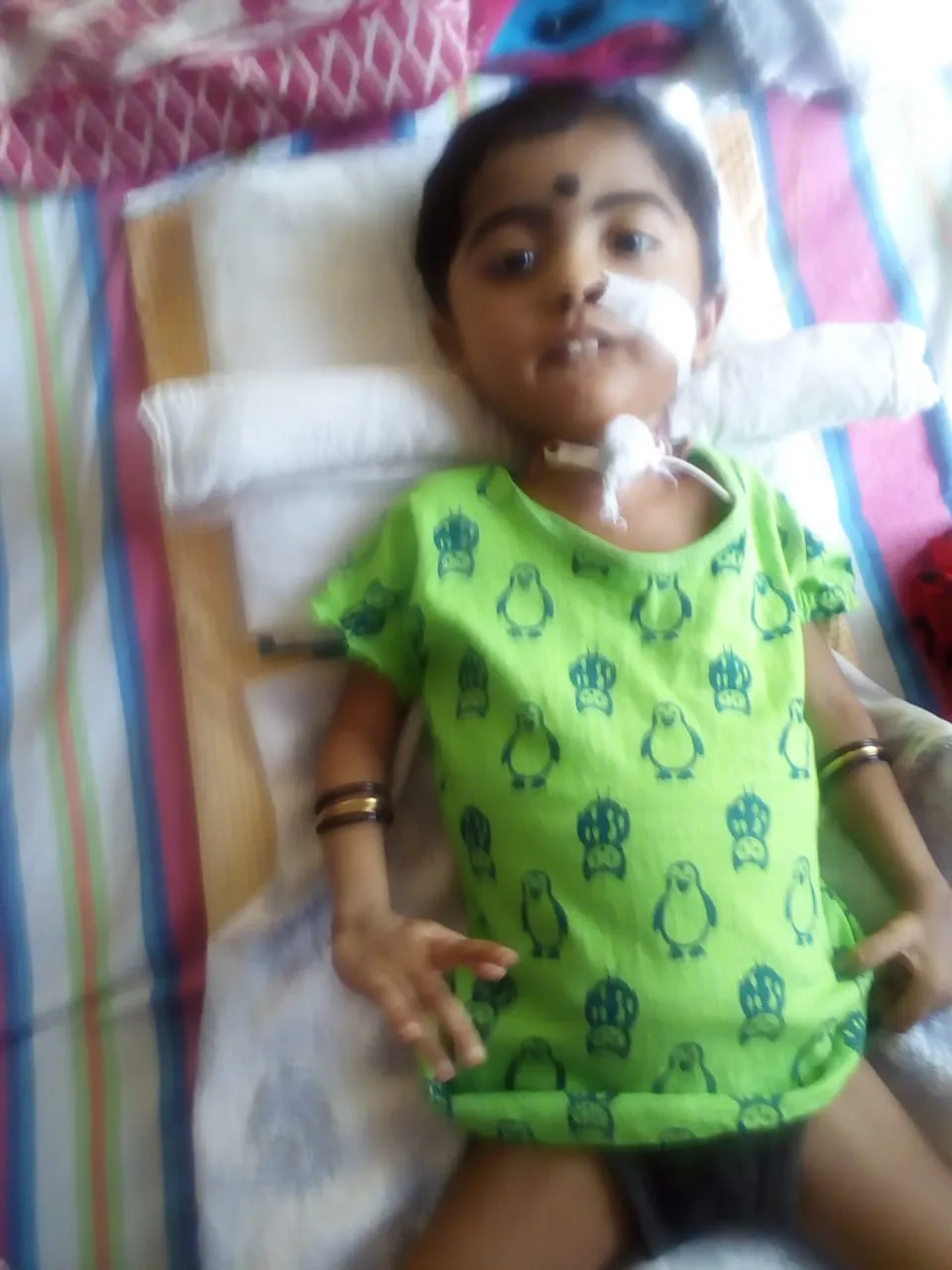
The most severe and most common form. Children with Type 1 are never able to sit on their own. Signs are usually seen at birth or within the first six months: floppy limbs, weak trunk movement, and difficulty holding up the head, feeding, swallowing and breathing. Many babies need breathing support or a feeding tube.
Without treatment, Type 1 progresses rapidly. Weakening of the breathing muscles leads to frequent chest infections, and most children did not survive beyond the age of two. Early treatment and good respiratory care have changed this outlook for many children.
SMA Type 2 (Dubowitz disease)
Symptoms appear between 6 and 18 months. Children with Type 2 can sit without support at some point, and some can stand with help, but they never walk unaided. The rate of progression varies greatly.
As in Type 1, children and adults with Type 2 may have difficulty swallowing and are prone to chest infections because the breathing muscles are weak. They need mobility aids such as a wheelchair. With good care, people with Type 2 live into adolescence and adulthood — many study, work and start families.
SMA Type 3 (Kugelberg–Welander disease)
Symptoms can appear any time from 18 months to early adulthood. People with Type 3 learn to stand and walk, but may find it hard to get up from sitting, run or climb stairs. They may have mild muscle weakness and a higher risk of chest infections. Later in life, some need a wheelchair. Life expectancy is close to normal.
SMA Type 4
Rare. Symptoms usually emerge in the second or third decade of life. People with Type 4 can walk throughout adulthood but experience slowly progressive muscle weakness and other typical SMA symptoms.
Type 0
Some doctors also describe a very rare Type 0, in which weakness is present before birth and babies need breathing support from birth.
Why does severity vary?
The main reason is the SMN2 “back-up” gene. People with more copies of SMN2 usually make more working SMN protein and have milder SMA. But the copy number alone cannot accurately predict a person’s type. Read more on genetics.